



To add a little variety, here is a post written by our apprentice Tilly, as she learns the art of framing…
One of the trickiest bits about learning framing is handling glass. Great big, fragile panes of the stuff, which you have to manhandle into cutting machines and frames when you aren’t cleaning every last speck of grime off them. I watch Tim and Natalie in awe when they casually whip out a huge piece, slot it into the machine, swipe the cutting wheel and then give the cut a smart tap. Lo! off shears a beautiful, perfectly sized piece of frameable glass! Magic. When I do it, I gingerly slide the piece into the machine, grit my teeth and swipe the cutting edge (trying not to mistake it for the board cutting blade). Then I administer what I consider to be a tidy tap. Nothing happens. So I tap again, a bit more firmly. Still nothing. Then I give it a good knock, and what usually happens is the glass divides along the line I want – with a bit at the end that has broken wrongly. So then I have to get out the hand cutters and the pliers and try to coax the ragged bit into a straight line. Mixed results on that one so far…
Even with careful handling you nick your fingers a lot. I’m thinking of buying shares in Elastoplast.
Then there are three types of glass to consider as well. Float, which is your standard stuff; TruVue which has clever reflective properties so your image looks gin-clear; lastly Artglass UV, which keeps your artwork pristine by cutting out UV rays which fade the image. They all have their place in the framing canon. I am using all three regularly now, hopefully with more success than in my first couple of days.
Does it make me a coward when I admit that I love TruVue and Artglass UV? Simple reason – they are precision-cut at the factory so I don’t have to do it!
Here’s one I made earlier:
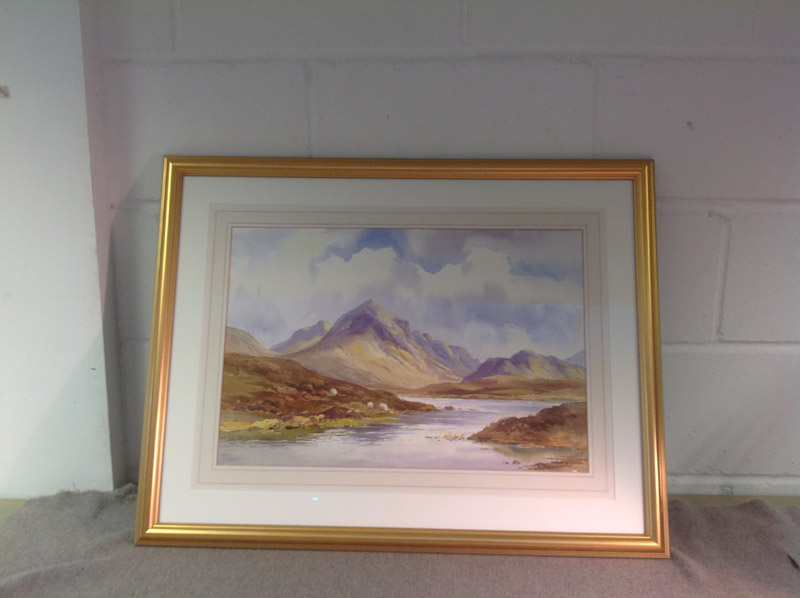
A Scottish scene with new frame, a new top mount and Artglass UV glazing!