



Oil or acrylic paintings on canvas, stretched over a frame, can and often are displayed exactly as they are, without any frame. Although, as any visit to the National Gallery will show, historically that just was not enough back in the day. Indeed many frames were much more elaborate than the pictures they surround, as we mentioned in our Halloween post. These days, due to many factors (possibly ranging from the influence of modern minimalism to the artist being flat broke), canvasses are often displayed without any frame. And they look lovely, especially if the edge is nicely finished too.

Oil paintings with tray frames
However a modern, simple (and also cheap) technique of adding just a simple wooden trim is becoming increasingly popular. Sometimes called floater frames, we call them tray frames, so named because we make a tray out of ‘L’ shaped wood for the canvas to sit in. And this technique can be extended to other images too, for example posters and maps can be bonded to a board before being given the tray treatment. If appropriate, the surface of the paper can be laminated with clear film for protection. Here we see a map we floated in a tray frame earlier today.
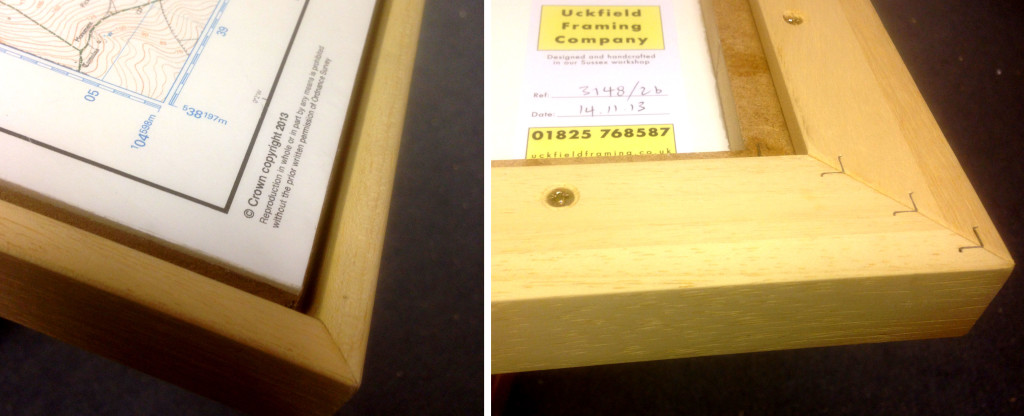
Front and back view of of a map in a tray frame
Sometimes the surrounding frame is more than just a simple slim timber section. A while back we were asked to frame a canvas in extremely rustic wood, and after some discussion with the client we settled on second hand scaffold boards. So after stretching the canvas onto its frame, we then made an outer rectangle from these boards, aging the newly cut mitres to match. We even added the metal corner protectors for authenticity, much to the delight of our customer.
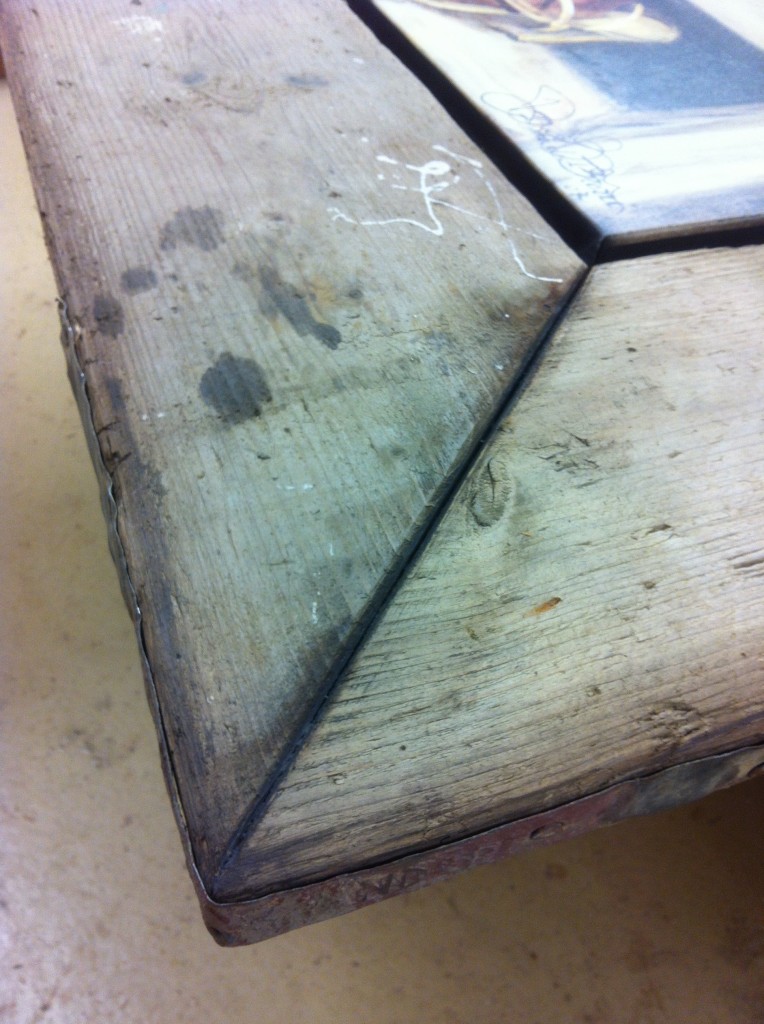
Scaffold board frame corner

Scaffold board frame hung in our client’s hallway
Do not worry, I never did.
What about?
These can be great for any event smaller pariets, birthday pariets, bar crawls, anything. They’re a great souvenir to keep after the fact. You can frame the best ones together or as part of a gallery wall!