



We love bit of history at the studio. Pictures with a story to them engage our interest, and make the framing of them a double pleasure. One such came to us for framing recently, and we were fascinated by its back story.
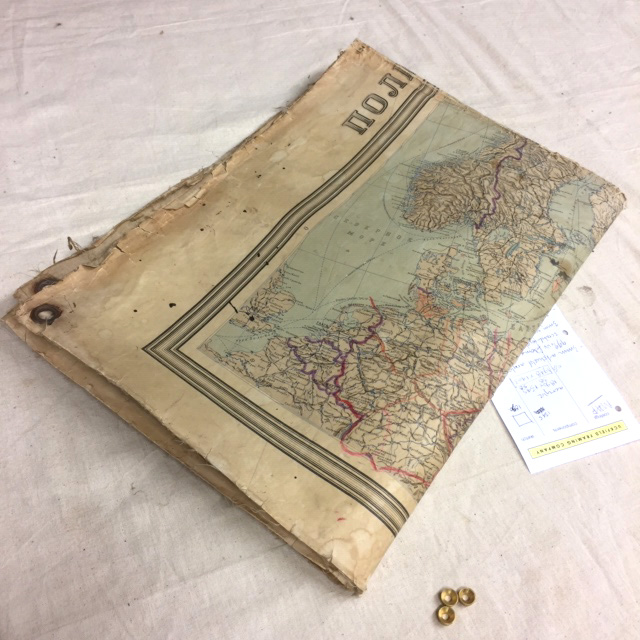
First of all, it is MASSIVE: a huge map of the former USSR, dated 1941. It’s so big it overlapped our big carpentry work table downstairs.
It was acquired by a former Polish officer, imprisoned by the Russians during the war, and used to guide him and many of his fellow prisoners, out of war-ravaged Russia, through the steppes back home to Poland when hostilities ceased.
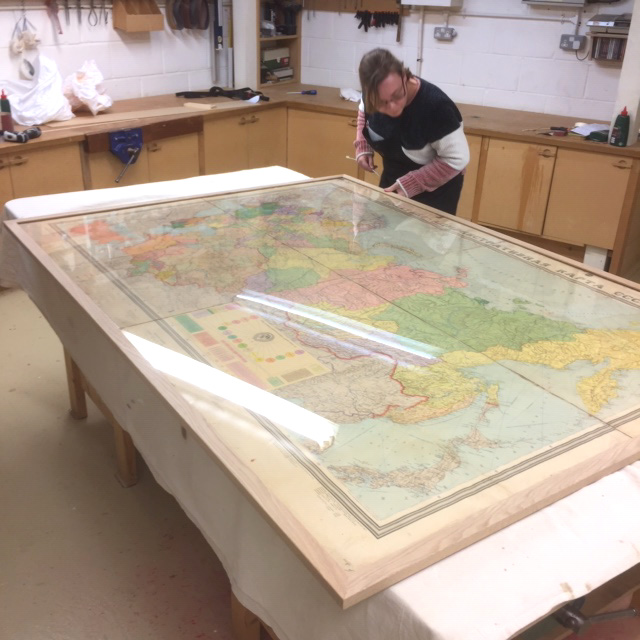
An item that big requires special treatment for a number of reasons – first, it’s in a fragile condition, having survived first its epic journey, and then the inevitable deterioration over the decades following. In addition, the products you use in front of, around and behind the image need to protect it, but also need to be lightweight – the weight of normal glass alone on a frame this size would be unworkable. So a lightweight foam back was prepared (with steel bolts and brass cups inserted to secure and suspend the map through its existing eyelets); a strong solid oak frame with UV Perspex glazing will contain and protect what is an important bit of family and social history for posterity.
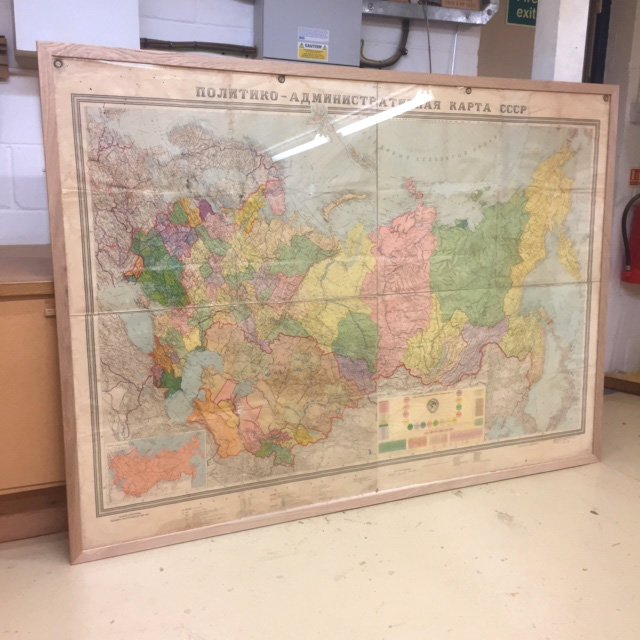
This one qualifies as the largest single image we’ve framed in a long while, and we are very proud of the results.
Tilly
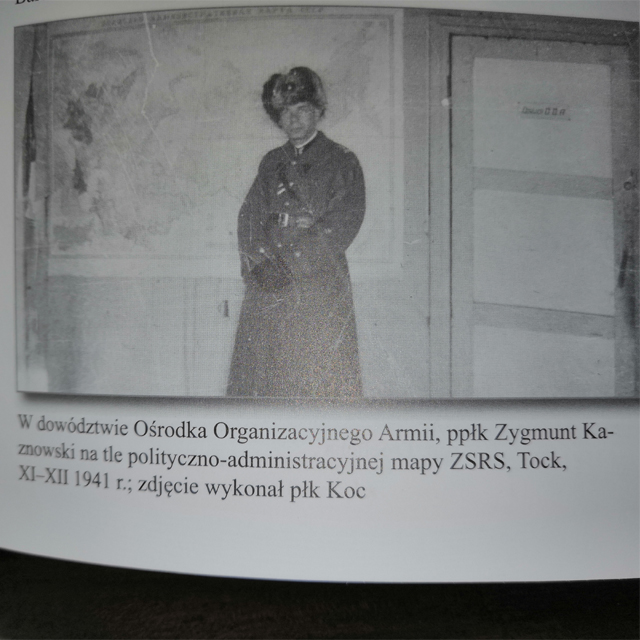
Postscript: Here is a photo of my grandfather Colonel Leon Koc, showing the USSR map in use. My grandfather was a career soldier who fought in both world wars and the Polish Soviet war of 1920 to 1921. When the Red Army invaded Poland on September 16th 1939 he was in command of a regiment in the south east of the country. After a month of fighting both Soviet and German forces he and his surviving troops were taken prisoner and transported to Russia. He was tried by the NKVD (the predecessor of the KGB) in one of the many show trials of Poles in Moscow and sentenced to death. However he avoided the fate of the 20,000 of his fellow Polish officers who were murdered by the NKVD on Stalin’s orders. His sentence was commuted to life imprisonment in Siberia, which amounted to a de facto death sentence.
When the Germans attacked the Soviet Union in July 1941 the roughly 200,000 Polish prisoners of war, including women and children, were released from camps all over the country. The Soviets wanted them to reform as an army to fight the Germans. However, following pressure from the allies, the Anders army, as it came to be known, began an epic journey through central Asia, Persia, Iraq and finally to Palestine where they linked up with British forces. I believe that this map is the only surviving example of its kind in the West. It is an amazing testament to the bravery and endurance of the men, women and children who made that incredible journey from Siberia to Palestine. Thank you for your part in its preservation.
With best wishes, Jozef Koc