



There really is no one-size-fits-all answer to the ideal way to frame a poster. Putting aside aesthetics for a moment, where the frame and mount materials obviously hugely influence the look and feel of the finished article, here we solely explore the practicalities with a couple of contrasting examples.

Fantastic scenes made entirely without Photoshop
This week we had the pleasure of framing another batch of classic movie posters for the Uckfield Picture House. These larger than life examples of 40 year old artwork were designed to be viewed from a distance, measuring up to 1600 x 1200 mm. Printed on paper these posters were never meant to last longer than the film’s cinema run. Folded and sent around the country they were cheap reproductions of the lovingly hand painted originals, depicting impossibly exaggerated artists’ impressions created long before Photoshop or even computers.
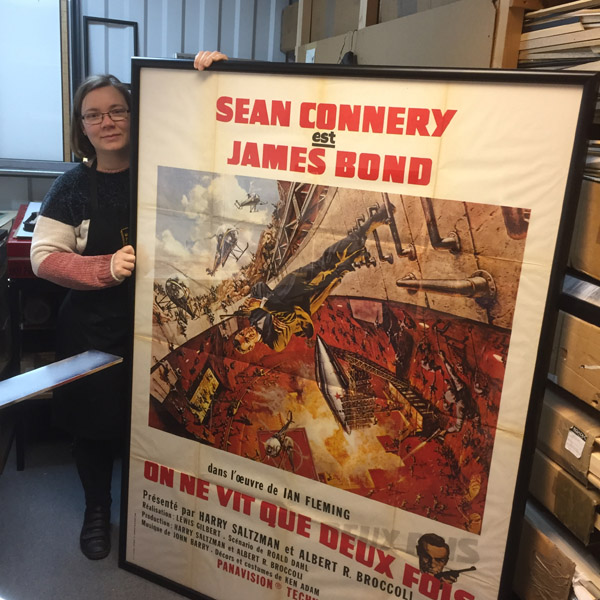
That’s about the size of it!
These classic movie posters are now collectible, in short supply and therefore inevitably now increasingly valuable. So here’s the dilemma, to hide them away from the ravages of life in a climate controlled lightproof box, or enjoy looking at them? Thankfully these classic posters will see the light of day, albeit behind UV and scratch resistant acrylic, whilst being cosseted between acid free conservation grade mount board.

A cost effective ‘frameless’ display
By contrast, we ‘framed’ a batch of posters for a local company a couple of months ago. Designed to deliver a message in a bold graphic way, the brief was to economically wall mount these posters. Our solution was to bond them to thin mdf, floated on a lightweight subframe, wall hung on split battens. No outer frame, no glazing. A simple but effective display at the right budget, confidently presuming these will most definitely not become valuable future classics.
Tim